
2019-09-11 09:31:00 Wed ET
federal reserve monetary policy treasury dollar employment inflation interest rate exchange rate macrofinance recession systemic risk economic growth central bank fomc greenback forward guidance euro capital global financial cycle credit cycle yield curve

Central banks in India, Thailand, and New Zealand lower their interest rates in a defensive response to the Federal Reserve recent rate cut. The central banks try to institute interest rate cuts to fend off any economic harm from the negative spiral of U.S.-China trade escalation, Brexit trade and capital exodus, and geopolitical confrontation in the South China Sea.
Australia may be the next to act in accordance with this dovish cycle of international interest rate reductions, and the likely Australian dollar depreciation can help boost Aussie exports worldwide.
On Wall Street, the major U.S. stock market indices such as S&P 500, Dow Jones, Nasdaq, and MSCI USA plummet 3%-5% as a result. Before the dust settles on Sino-American trade conflict resolution, the Chinese central bank lets the renminbi currency weaken to 7-yuan-per-greenback in more than a decade. Any aggressive greenback depreciation (or Federal Reserve downward interest rate adjustment) may risk upsetting a reasonably stable global economic order of low inflation rates, exchange rates, and non-agribusiness employment levels in the decade after the global financial crisis of 2008-2009. The negative ripple effects can lead to more economic headwinds and fewer monetary policy levers for many central banks worldwide.
If any of our AYA Analytica financial health memos (FHM), blog posts, ebooks, newsletters, and notifications etc, or any other form of online content curation, involves potential copyright concerns, please feel free to contact us at service@ayafintech.network so that we can remove relevant content in response to any such request within a reasonable time frame.
2019-01-19 12:38:00 Saturday ET
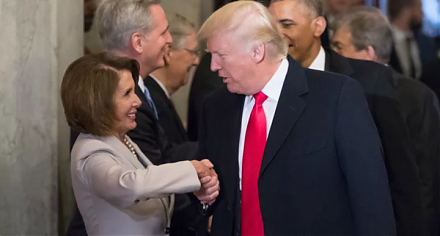
U.S. government shuts down again because House Democrats refuse to spend $5 billion on the border wall that would give President Trump great victory on his
2019-11-23 08:33:00 Saturday ET

MIT financial economist Simon Johnson rethinks capitalism with better key market incentives. Johnson refers to the recent Business Roundtable CEO statement
2017-03-03 05:39:00 Friday ET

As the biggest IPO since Alibaba in recent years, Snap Inc with its novel instant-messaging app SnapChat achieves $30 billion stock market capitalization.
2019-06-13 10:26:00 Thursday ET

The Chinese Xi administration may choose to leverage its state dominance of rare-earth elements to better balance the current Sino-U.S. trade war. In recent
2023-12-08 08:28:00 Friday ET

Tax policy pluralism for addressing special interests Economists often praise as pluralism the interplay of special interest groups in public policy. In
2018-10-30 10:41:00 Tuesday ET

Personal finance author Ramit Sethi suggests that it is important to invest in long-term gains instead of paying attention to daily dips and trends. It