
2018-03-27 07:33:00 Tue ET
technology antitrust competition bilateral trade free trade fair trade trade agreement trade surplus trade deficit multilateralism neoliberalism world trade organization regulation public utility current account compliance

CNBC's business anchorwoman Becky Quick interviews Nobel Laureate Joseph Stiglitz on the current trade war between America and China. As America imposes $60 billion tariffs on key Chinese imports such as steel and aluminum, China fights back with $3 billion tariffs on U.S. exports for at least 128 items. Stiglitz points out that the poor and less economically-privileged American residents with subpar socioeconomic status and educational attainment are likely to suffer due to higher prices of many consumption goods. Also, most U.S. corporations fund their capital investments with tax-deductible debt, and so tax cuts will largely benefit these large corporations and high net-worth investors in America.
However, the typical U.S. household will face lower purchasing power, and fiscal stimulus may or may not boost real investment and productivity growth. For this reason, President Trump's economic policy reform may wreak havoc in real macro-economic activities, especially if GDP per capita growth cannot exceed investor expectations and inflationary pressures in the medium term.
Stiglitz specifically favors globalization and free trade if the U.S. government sets clear limits on product market liberalization.
If any of our AYA Analytica financial health memos (FHM), blog posts, ebooks, newsletters, and notifications etc, or any other form of online content curation, involves potential copyright concerns, please feel free to contact us at service@ayafintech.network so that we can remove relevant content in response to any such request within a reasonable time frame.
2018-05-06 07:30:00 Sunday ET
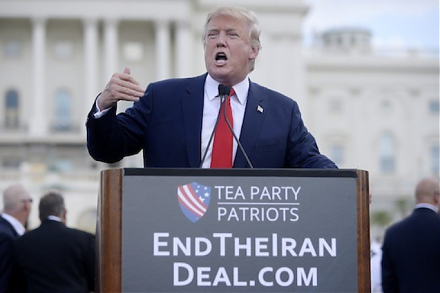
President Trump withdraws America from the Iran nuclear agreement and revives economic sanctions on Iran for better negotiations as western allies Britain,
2019-02-11 09:37:00 Monday ET

Corporate America uses Trump tax cuts and offshore cash stockpiles primarily to fund share repurchases for better stock market valuation. Share repurchases
2020-09-11 10:22:00 Friday ET

AYA fintech network platform provides proprietary alpha stock signals and personal finance tools. In recent times, we have completed our fresh website up
2020-05-05 09:31:00 Tuesday ET

Our fintech finbuzz analytic report shines fresh light on the fundamental prospects of U.S. tech titans Facebook, Apple, Microsoft, Google, and Amazon (F.A.
2017-02-07 07:47:00 Tuesday ET

With prescient clairvoyance, Bill Gates predicted the recent sustainable rise of Netflix and Facebook during a Playboy interview back in 1994. He said th
2022-10-05 08:24:00 Wednesday ET

Precautionary-motive and agency reasons for corporate cash management Bates, Kahle, and Stulz (JF 2009) empirically find that public firms have doubled t