
2018-05-21 07:39:00 Mon ET
stock market competition macrofinance stock return s&p 500 financial crisis financial deregulation bank oligarchy systemic risk asset market stabilization asset price fluctuations regulation capital financial stability dodd-frank

Dodd-Frank rollback raises the asset threshold for systemically important financial institutions (SIFIs) from $50 billion to $250 billion. This legislative change exempts some banks from annual stress tests and living wills that the Obama administration designed as a safety valve to prevent another major financial calamity. As a result, this structural regime switch will provide smaller financial institutions with primary relief from the strict rules and regulations that apply to most Wall Street banks.
President Trump affirms his clear intention to sign this bill into law. The Dodd-Frank rollback tends to benefit non-systemic financial institutions, community banks, and other small lenders. However, Congress expresses the consensus view that most banks should be subject to substantially higher core equity capital requirements to safeguard against extreme losses in rare times of financial stress.
As financial intermediary capital covaries with both aggregate credit supply and household debt fluctuations, these ebbs and flows cause real business cycles and financial market fluctuations. Sticky prices and interest rates can persist over the interim period, and transitional dynamism manifests in real macro movements such as real GDP expansion, employment, capital investment, industrial production, and bank balance sheet expansion.
If any of our AYA Analytica financial health memos (FHM), blog posts, ebooks, newsletters, and notifications etc, or any other form of online content curation, involves potential copyright concerns, please feel free to contact us at service@ayafintech.network so that we can remove relevant content in response to any such request within a reasonable time frame.
2022-05-15 10:29:00 Sunday ET

Innovative investment theory and practice Corporate investment can be in the form of real tangible investment or intangible investment. The former conce
2018-04-02 07:33:00 Monday ET
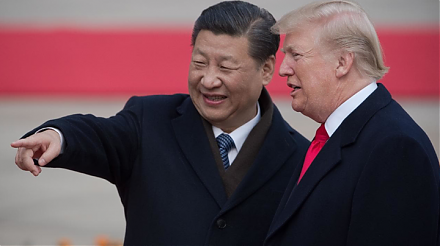
China President Xi JinPing tries to ease trade tension between America and China in his presidential address at the annual Boao forum. In his vulnerable att
2020-04-24 11:33:00 Friday ET

Disruptive innovations tend to contribute to business success in new blue-ocean markets after iterative continuous improvements. Clayton Christensen and
2018-02-23 09:35:00 Friday ET

Warren Buffett releases his annual letter to Berkshire Hathaway shareholders as of February 2018. Buffett discusses Berkshire's core cash ambition, its
2019-06-23 08:30:00 Sunday ET

The financial crisis of 2008-2009 affects many millennials as they bear the primary costs of college tuition, residential demand, health care, and childcare
2023-07-14 10:32:00 Friday ET

Ray Fair applies his macroeconometric model to study the central features of the U.S. macroeconomy such as price stability and full employment in the dual m