
2019-06-05 10:34:00 Wed ET
federal reserve monetary policy treasury dollar employment inflation interest rate exchange rate macrofinance recession systemic risk economic growth central bank fomc greenback forward guidance euro capital global financial cycle credit cycle yield curve
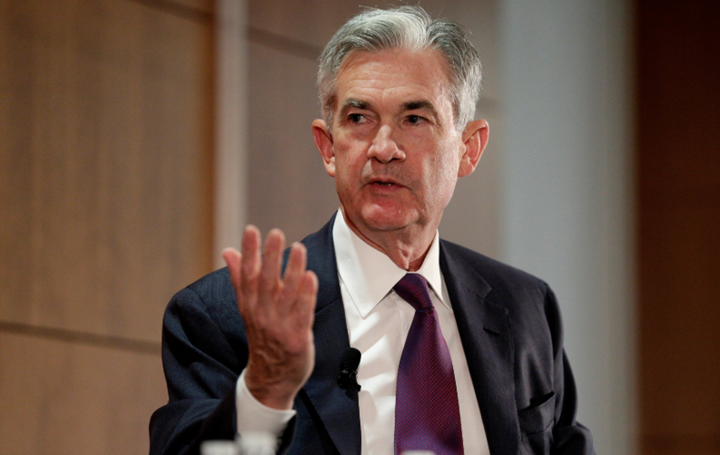
Fed Chair Jay Powell suggests that the recent surge in U.S. business debt poses moderate risks to the economy. Many corporate treasuries now carry about 40% debt as part of equity market valuation. St Louis Federal Reserve Bank recent data indicate that the corporate-debt-to-EBITDA ratio has risen to the upper range of 2.3x to 3.1x.
Powell warns that the current level of business debt can cause financial stress to borrowers if the economy weakens. However, Powell adds the cautionary caveat that business debt may not present imminent risks to U.S. financial system stability, household consumption, and business growth. As the Federal Reserve continues to assess the main amplification of business debt deterioration, short-term liquidity risk remains moderate in the core U.S. financial sector. In the meantime, the Trump administration seeks to raise fiscal deficits to support ambitious public programs on infrastructure, education, residential estate, health care, and social security etc. This public debt accumulation may crowd out intertemporal business debt capacity at the margin. If the U.S. aggregate debt capacity remains invariant over time, the government either has to tolerate higher inflation in the form of seigniorage taxes, or needs to reconsider the ripple effects of incremental corporate debt on the real economy.
If any of our AYA Analytica financial health memos (FHM), blog posts, ebooks, newsletters, and notifications etc, or any other form of online content curation, involves potential copyright concerns, please feel free to contact us at service@ayafintech.network so that we can remove relevant content in response to any such request within a reasonable time frame.
2024-10-14 11:33:00 Monday ET

Stock Synopsis: Video games continue to take both screen time and monetization from many other forms of entertainment. We are broadly positive about the
2017-05-07 06:39:00 Sunday ET

While the original five-factor asset pricing model arises from a quasi-lifetime of top empirical research by Nobel Laureate Eugene Fama and his long-time co
2022-02-05 09:26:00 Saturday ET

Modern themes and insights in behavioral finance Shiller, R.J. (2003). From efficient markets theory to behavioral finance. Journal of Economi
2019-06-03 11:31:00 Monday ET
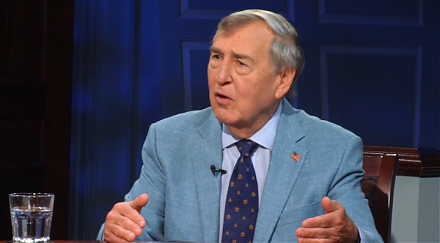
The Sino-U.S. trade war may be the Thucydides trap or a clash of Caucasian and non-Caucasian civilizations. The proverbial Thucydides trap refers to the his
2019-09-30 07:33:00 Monday ET

AYA Analytica finbuzz podcast channel on YouTube September 2019 In this podcast, we discuss several topical issues as of September 2019: (1) Former
2023-05-14 12:31:00 Sunday ET

Paul Samuelson defines the mathematical evolution of economic price theory and thereby influences many economists in business cycle theory and macro asset m