
2019-07-13 07:17:00 Sat ET
technology antitrust competition bilateral trade free trade fair trade trade agreement trade surplus trade deficit multilateralism neoliberalism world trade organization regulation public utility current account compliance
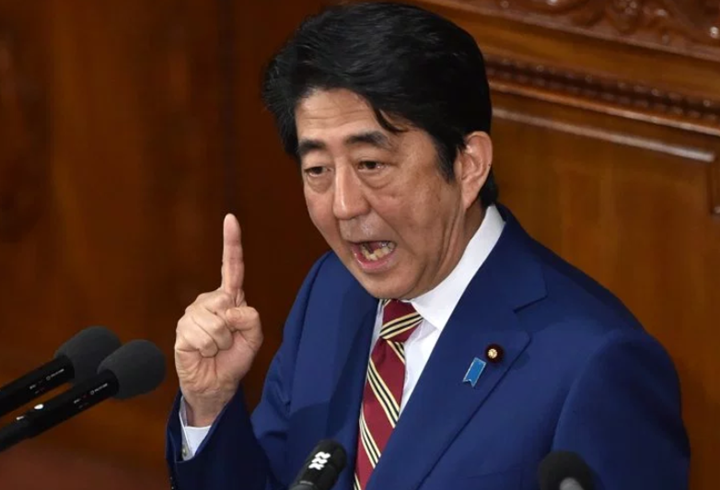
Japanese prime minister Shinzo Abe outlines the main economic priorities for the G20 summit in Osaka, Japan. First, Asian countries need to forge the key Regional Comprehensive Economic Partnership (RCEP) for both free and fair trade in China, India, Japan, South Korea, Australia, New Zealand, and the 10 members of the Association of South East Asian Nations (ASEAN). This Asian trade bloc promotes sound and efficient trade relations as China, India, and Japan lead the mainstream consensus views on economic integration, financial stabilization, and intellectual property protection.
Second, Asian countries must help ensure the safe and free flows of data via digital networks. With respect to this recent digitization, the socioeconomic ramifications of data flows can rival, or may even surpass, the broader impact of petroleum and the internal combustion engine in the prior century. Third, Japan leads many Asian countries in terms of disruptive innovation that helps tackle global environmental degradation. In the new era of beautiful harmony, the Japanese Abe administration attempts to help reduce carbon emissions with better artificial photosynthesis. This innovative technology contributes to maximum sustainable employment, economic growth, and capital investment accumulation. Overall, the Abe administration hosts the G20 summit for better international trade, data, and environmental protection.
If any of our AYA Analytica financial health memos (FHM), blog posts, ebooks, newsletters, and notifications etc, or any other form of online content curation, involves potential copyright concerns, please feel free to contact us at service@ayafintech.network so that we can remove relevant content in response to any such request within a reasonable time frame.
2018-02-19 08:39:00 Monday ET

Snap cannot keep up with the Kardashians because its stock loses market value 7% or $1 billion after Kylie Jenner tweets about her decision to leave Snapcha
2022-05-30 09:32:00 Monday ET

The new semiconductor microchip demand-supply imbalance remains quite severe for the U.S. tech and auto industries. Our current fundamental macro a
2020-07-05 11:31:00 Sunday ET

Business entrepreneurs dare to dream, remain true and authentic to themselves, and try to make a great social impact in the world. Alex Malley (2014)
2020-11-24 09:30:00 Tuesday ET

Many analytic business competitors can apply smart data science to support their distinctive capabilities and strategic advantages. Thomas Davenport and
2026-01-31 10:31:00 Saturday ET

In recent years, several central banks conduct, assess, and discuss the core lessons, rules, and challenges from their monetary policy framework r
2019-04-26 09:33:00 Friday ET

JPMorgan Chase CEO Jamie Dimon defends capitalism in his recent annual letter to shareholders. As Dimon explains here, socialism inevitably produces stagnat