
2019-12-25 19:46:00 Wed ET
treasury deficit debt employment inflation interest rate macrofinance fiscal stimulus economic growth fiscal budget public finance treasury bond treasury yield sovereign debt sovereign wealth fund tax cuts government expenditures

Former White House chief economic advisor Nouriel Roubini discusses the major limits of central-bank-driven fiscal deficits. The International Monetary Fund (IMF) projects subpar global economic growth due to the recent trifecta of the tentative Sino-U.S. trade agreement, geopolitical energy tension in the middle east, and a cloudy economic outlook for Britain and E.U. in light of soft Brexit trade uncertainty. These primary global tail risks anchor inflation expectations worldwide, so central banks engage in tacit monetary policy coordination in accordance with the tripartite congressional mandate of maximum sustainable employment, price stability, and financial market stabilization.
With greater government bond issuance, central banks can help fund fiscal deficits that manifest in the form of both tax cuts and infrastructure expenditures. Left-wing proponents of Modern Monetary Theory argue that larger permanent fiscal deficits help stimulate economic growth when central banks monetize these fiscal deficits in the absence of runaway inflation and economic slack.
However, Roubini argues that the current monetization of fiscal deficits cannot be a sustainable policy response in the long run. Either the global economy eventually experiences a supply shock due to pervasive shortages of oil and natural gas, or an inflationary shock becomes a major economic disturbance worldwide.
If any of our AYA Analytica financial health memos (FHM), blog posts, ebooks, newsletters, and notifications etc, or any other form of online content curation, involves potential copyright concerns, please feel free to contact us at service@ayafintech.network so that we can remove relevant content in response to any such request within a reasonable time frame.
2020-03-12 09:32:00 Thursday ET

Google CEO Eric Schmidt and his co-authors show the innovative corporate culture and mission of the Internet search tech titan. Eric Schmidt, Jonathan Ro
2018-01-04 07:36:00 Thursday ET

The world now faces an economic inequality crisis with few policy options. Some recent U.S. Federal Reserve data suggest that both income and wealth inequal
2018-02-15 07:43:00 Thursday ET

Fed minutes reflect gradual interest rate normalization in response to high inflation risk. FOMC members revise up the economic projections made at the Dece
2019-05-09 10:28:00 Thursday ET
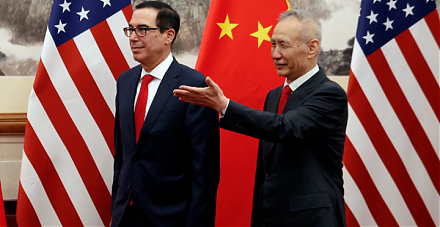
President Trump ramps up 25% tariffs on $200 billion Chinese imports soon after China backtracks on the Sino-American trade agreement. U.S. trade envoy Robe
2019-02-05 10:32:00 Tuesday ET
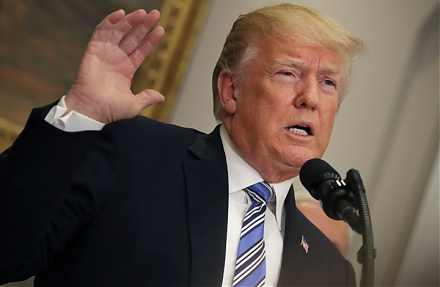
President Trump remains optimistic about the Sino-American trade war resolution of both trade deficit eradication and tech transfer enforcement. Trump now s
2018-03-13 07:34:00 Tuesday ET

From crony capitalism to state capitalism, what economic policy lessons can we learn from President Putin's current reign in Russia? In the 15 years of