
2018-06-02 09:35:00 Sat ET
technology antitrust competition bilateral trade free trade fair trade trade agreement trade surplus trade deficit multilateralism neoliberalism world trade organization regulation public utility current account compliance
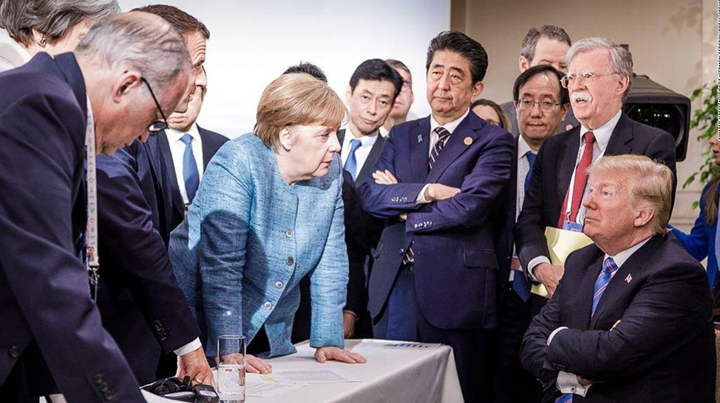
The finance ministers of Britain, Canada, France, Germany, Italy, and Japan team up against U.S. President Donald Trump and Treasury Secretary Steven Mnuchin at a G7 forum. These finance ministers suggest that the recent U.S. trade actions undermine economic confidence in the Western alliance.
The G6 delegation requests Mnuchin to communicate their unanimous concern and disappointment to President Trump. Meanwhile, Commerce Secretary Wilbur Ross completes his recent trade talks in China with little sign of progress. In China, the state-run news agency Xinhua states that all the economic outcomes of recent trade talks will not take effect if the U.S. imposes any tariffs or other trade sanctions. These recent developments suggest the delicate balance that both Mnuchin and Ross need to maintain as Trump moves forward with 25% tariffs on aluminum and 10% tariffs on steel from his close Western allies and another $50 billion tariffs on Chinese imports.
OECD figures suggest that the current global economic growth rate is 3.8% without any exogenous tariff shocks. S&P chief economist Paul Gruenwald suggests that these tariffs can take a quarter off the world's economic growth rate in a Sino-U.S. trade war. The European Central Bank's projections also warn of a 1% contraction in global economic growth in the first year of Trump tariffs. The medium-term real effects of Trump tariffs may be detrimental to global economic growth and stock market resilience.
If any of our AYA Analytica financial health memos (FHM), blog posts, ebooks, newsletters, and notifications etc, or any other form of online content curation, involves potential copyright concerns, please feel free to contact us at service@ayafintech.network so that we can remove relevant content in response to any such request within a reasonable time frame.
2019-01-03 10:38:00 Thursday ET

American parents often worry about money and upward mobility for their children. A recent New York Times survey suggests that nowadays American parents spen
2019-06-11 12:33:00 Tuesday ET
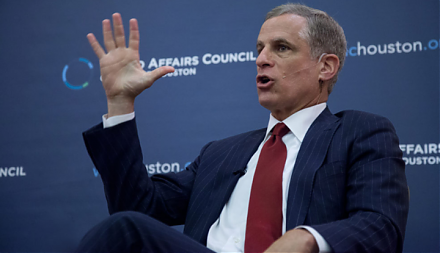
Dallas Federal Reserve Bank President Robert Kaplan expects the U.S. economy to grow at 2.2%-2.5% in 2019-2020 as inflation rises a bit. In an interview wit
2026-10-31 12:38:00 Saturday ET

Today tech titans and billionaires continue to reshape global pharmaceutical investments for both better healthspan and longer lifespan. We discuss, desc
2019-02-03 13:39:00 Sunday ET
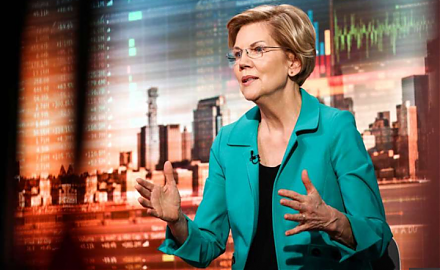
It can be practical for the U.S. to impose the 2% wealth tax on the rich. Democratic Senator Elizabeth Warren proposes a 2% wealth tax on the richest Americ
2018-02-07 06:38:00 Wednesday ET
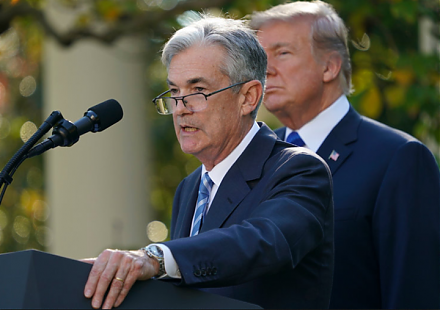
The new Fed chairman Jerome Powell faces a new challenge in the form of both core CPI and CPI inflation rate hikes toward 1.8%-2.1% year-over-year with stro
2019-10-27 17:37:00 Sunday ET
International climate change can cause an adverse impact on long-term real GDP economic growth. USC climate change economist Hashem Pesaran and his co-autho